Close
You may already have therapeutic or coaching approaches that work well. We are not asking you to abandon them. The question is whether Orpheus could add another capability to the work you already do.
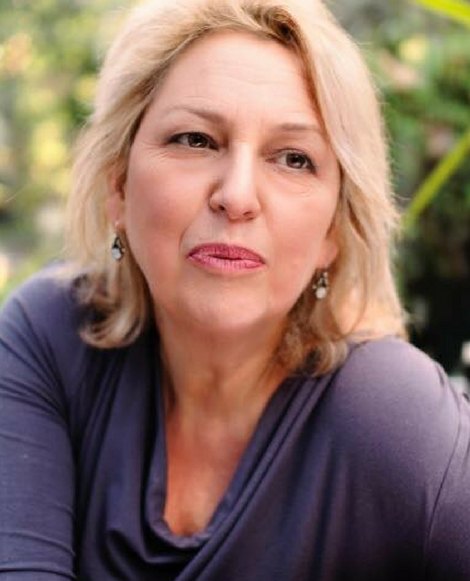
Sally is Orpheus's Expert Therapist: a senior therapist, published author and media commentator with more than 25 years' experience in private practice, trained in a wide range of therapeutic approaches. She uses the Orpheus tools in her own practice and works with practitioners who are considering them.
In her words: "One situation I meet again and again is the client who understands themselves extremely well. They know why they react as they do. They recognise the pattern. They may know where it came from. And the same unwanted emotional response continues. They know differently, but they do not yet feel differently."
"That gap is why I became interested in Orpheus. I was not looking to replace the approaches I already use. I wanted another way of working when insight alone was not changing the feeling."
Sally's practitioner listingA live webinar about the thinking around using Orpheus in professional work, for practitioners who are curious but not yet ready to commit to formal training. It is not Level 1 practitioner training, and attending is not required before you begin the training. Sally will cover questions such as:
Sally will also be clear about the limits of the approach, including when Orpheus may not be the most appropriate intervention. There will be time for the questions experienced practitioners ask when they consider taking on a different method. Sally's short recorded introduction is just above. Register below and we will email you the joining link and reminders.
Can’t attend live? Register anyway and we’ll send you access to the recording afterwards.
Missed one? Recordings of past webinars are kept in the Academy portal: watch with a free account.
Orpheus is built around the Orpheus Decoupling Process, the system behind the Orpheus app and Academy training. It is designed to work with automatic unwanted emotional responses attached to particular thoughts and memories, as well as limiting beliefs and patterns. The process is delivered through specially structured audio tracks using changing sounds, clicks and tones. The user actively responds to these sounds while bringing their attention to the unwanted emotional response or belief they want to change. This combination is central to the Orpheus Decoupling Process.
The work can be content free, which means a client does not necessarily have to disclose or repeatedly describe the details of a difficult or distressing experience. For practitioners, this does not remove the need for appropriate assessment, professional judgement or safeguarding. Content free does not mean context free.
Orpheus is designed to sit alongside a practitioner's existing therapeutic or coaching skills rather than replace them. The technology delivers the process. The practitioner brings the judgement.
Science overviewExperienced practitioners rarely need another approach that asks them to discard what they already know. Orpheus is designed to sit alongside your existing therapeutic skills. There will be times when your established approach is exactly what a client needs. There will also be moments when a client understands their difficulty extremely well but continues to experience an emotional or physiological response that does not change through insight alone. That is where Orpheus may offer an additional option.
A structured process can be delivered consistently by technology. That is only part of the work. The practitioner still has to think:
The technology delivers the process. The practitioner brings the judgement.
Your clinical experience still matters. You decide what to work on, whether the client is suitable, when to use Orpheus, what has changed, what remains, and when another approach would serve the client better. The aim is not to make every client fit Orpheus. It is to give you another precise tool to draw on when it is appropriate.
Two completed pilots have been peer reviewed: a wellbeing service pilot with Edge Hill University with 26 students over 39 sessions, and a single session pilot with 10 patients meeting PTSD criteria at Mexico's National Institute of Neurology and Neurosurgery. Both reported statistically significant improvements.
A further 12-week evaluation involving approximately 50 participants is currently underway with Edge Hill University, examining the use of Orpheus in relation to anxiety, stress and overwhelm. We believe practitioners should be able to examine the evidence for themselves, including what individual studies do and do not establish.
We think it is important to distinguish between encouraging clinical experience and conclusions that research can support. As findings become available we will report them accurately, including the limitations of the evidence as well as what the results may indicate. The purpose of research is not simply to confirm what we hope to find. It is to understand more clearly what Orpheus does, for whom, under what circumstances and with what measurable outcomes. We would rather you read the write-ups and judged for yourself what each one does and does not show.
Science overviewThere is a clear route from exploring Orpheus to using it with clients in your own practice. The first step is optional: you can go straight to Level 1 training if you already know you want to.
You do not need to make an immediate commitment to training. Sally's recorded introduction and live webinar are there to help you understand how Orpheus works, where it may fit within your existing toolkit, and whether you want to take the next step.
If you decide to continue, your practitioner training begins with Level 1. After completing the training and passing the Level 1 assessment, you can join the Orpheus Academy as a Licenced Orpheus Practitioner and use Orpheus with your clients.
Neither the webinar nor the recorded introduction is a required step. If you already know you want to learn the Orpheus Decoupling Process, go straight to the training.
Orpheus has two distinct routes. If you are using Orpheus for yourself, you are a self-helper: the Orpheus app is yours to use, and you are welcome to take the training as well, without becoming a Licenced Orpheus Practitioner or joining the Academy. This practitioner pathway is for therapists, coaches and other practitioners with their own practice who want to use Orpheus with clients. That takes the Level 1 training, the Level 1 assessment and Academy membership, which is the framework for developing your Orpheus skills, progressing through the levels and using Orpheus within professional and ethical boundaries.

Around two hours of video introducing the Orpheus Decoupling Process and its cornerstone tool, the Negative Emotion Destroyer tracks, which work on unwanted emotions.

Builds on level 1 and brings in beliefs and patterns of behaviour, using the Creator and Eraser tracks.

Specialisms for Academy members, in areas such as addiction, career coaching and eating disorders.
Requirements, exams, licencing, membership and prices stay on the Academy pages.
Orpheus Academy membershipNo. Both are free introductions for therapists, coaches and other practitioners who want to understand why Orpheus may be relevant to their work before deciding whether to train. Formal teaching of the Orpheus Decoupling Process stays in the Orpheus Academy.
No. If you already know you want to train, go straight to the Academy courses above.
It does not have to. Sally uses Orpheus alongside other therapeutic approaches. The relevant question is whether it adds something useful to the way you already work.
No. Content free does not remove professional responsibility, safeguarding, appropriate assessment or scope of practice. It means the client does not necessarily have to disclose every detail of an issue in order to work with a particular unwanted emotional response.
Then you do not need this route. The app is the place to start, and the Academy training is open to anyone who wants to understand the process more deeply.